
The power is in name - from Business week
The World's Top Brands
Saturday, July 29, 2006
The World's Top Brands
Labels:
Neil Bhandar

Friday, July 28, 2006
Leadership is generational
There is a lot of hoopla about change management and leadership, NO denying ANY organization would not exist let alone succeed in absence of strong leadership and an effective change management program that weathers changing strategies, organizational structures, market conditions, etc. What’s worrisome thought is the perspective a lot of business graduates and business managers have about change and leadership. As life gets faster business graduates and managers expect an equally fast turn on change and leadership. It is not as fast and easy as downloading a good book on change and leadership on to your iPod listening or reading through the pages of the HBR and knowing all that there is to know about change and leadership. The Titanic does not change course in an instant! I am particularly skeptical of the turnaround experts, not to say short term goals don’t matter but they come at a cost and that cost will be adequately compensated with some depression in the long run.
We see leaders, read about them, hear about them, talk about them, even study their decisions and try to emulate them. What one takes away may or may not be the same the next person takes away. Not too long ago I had a good friend who visited a conference where the legendary Jack Welch presented. I adore Jack’s leadership and business acumen; have been a huge fan forever! When this friend mentioned he wanted to get a business degree only because he heard Jack mention ‘today’s managers need to develop people skill’, I thought what on earth! Coming from Jack sounded a little strange, the same person who had such a public divorce, which only got messier in the media... & people skills.
I believe the truth is we need all the knowledge there is, our own vision combined with a STRONG heart to be patient and persist at the mission/vision, make the TOUGH decisions. A little steering every so often, engagement and energy & the organization will see the light on the horizon. Changing people’s philosophies, ideology and thoughts takes generations. Leadership is a philosophical, Leadership is generational!
Labels:
Neil Bhandar
Thursday, July 27, 2006
Modularity - Life’s little resets!
Yesterday was a hectic day... I woke up on time but with all the little things I had to complete I was late for my train, lucky me I still made it. By the time I reached my transfer point I was back on track. Things went smooth only until I got to office and I had to put out a fire that seemed to derail my entire day’s schedule, once again lucky me half way down the day one of my meeting was cancelled and I got an hour of my ever so important life back. I was cruising just fine. On my way back home I reflected on my day all the mini crises I had to deal with, the fires I had to put out, plans I had to make and objectives I had met.
My reflection led me to the thought of resets! How modular is life, the decoupling helps and hurts. Clearly the modularity allows for those quick and easy resets in life that enable us to reload and fire. How great is that! A perfect opportunity to reset and start all over again. Not all disruptions result in the same level of resilience from life. The classic was 9-11, life was crippled for days, travelers within the US and a number of cases globally were stranded, but things eventually bounce back.
Is our modular lifestyle offering options for resets or is life just getting more resilient from all the shocks and experience?
Labels:
Neil Bhandar
In an age of creativity-design-innovaiton
Posted on The Donald Trump blog - My Candidates to Replace the MBA
I am not a fan of Mr. Trump's blog but this is an interesting article by Tom Peters.
Labels:
Neil Bhandar
Promises, Lies and Apologies: Is It Possible to Restore Trust?
Interesting reseasrch from: Knowledge@Wharton -
Promises, Lies and Apologies: Is It Possible to Restore Trust?
"Trust is critical for organizations, effective management and efficient negotiations, yet trust violations are common"
"It's okay to screw me over, but don't deceive me as well," says Bradlow. "If you screw me over and lie about it, it's going to take even longer to recover from it."
The authors say
Labels:
Neil Bhandar
Wednesday, July 26, 2006
The business of influence
The podcasts at the University of Chicago are fascinating. Here is from Steven Levitt.
Steven Levitt, Alvin H. Baum Professor in Economics at the University of Chicago and author of the New York Times bestseller Freakonomics, regaled the students with cases from his research. One example illustrated why Chicago emphasizes the importance of hard data for all kinds of decision-making.
MP3 File
Labels:
Neil Bhandar
Badge of shame
Ever had one of those days when you thought you worked on a presentation for a role model and intended to impress only to be pointed juvenile mistakes in the presentation? Juvenile is probably an understatement. Everything came crashing from mistakes in charts to assumptions that did not address the issue in question, the most devastating was when 'common sense checks' in the presentation fell apart!
Rough, Rough, Rough... You bounce back! Life goes on!
In any case the best thing one can do is seek feedback, take the feedback personally and apply. I decided I would go back to my role model and acknowledge my mistakes, take responsibilities to redeem myself. Work to build my equity all over again. It was rough!
Labels:
Neil Bhandar
Tuesday, July 25, 2006
No One Knows What They're Doing
No One Knows What They're Doing - interesting read
Fast Company suggests trying:
1. Practice admitting when you're stuck or don't know what you're doing (perhaps in safer environments at first).
2. Open up to others to help you begin to find answers to your challenges.
3. Begin to notice the sense of freedom that can come from not having to "know" all the time.
Labels:
Neil Bhandar
Vanishing enemy
Every time I listen to the news these I am amazed at the similarity between guerrilla wars (particularly the from the fundamentalist organizations) and the private label consumer product labels war games. A few years ago I had the opportunity to dig through some old data before and around the second big war. The issues of brand wars were similar then as they are now. The lions always have to keep up with the nimble young gazelles; of course the modern gazelles have sharp teeth and paws of the lion, and a large number competing for the same opportunities. What makes it particularly difficult is the modern day relationship the lions have with the gazelles, acting as customers and competitors at the same time.
There are obviously three obvious courses most organizations take to deal with the challenges, driven by their equity, their relationships and lastly their strengths. Going after the gazelles versus other lions; Ignoring the gazelles and concentrating on other lions that feast on their opportunities; or Going after other lions while keeping an eye on the gazelles in case there arises an opportunity to pounce and feast on them. All of this does not seem much different from global politicking.
Obviously the gazelle does not make for much of a feast when you are a large lion unless you can round up an entire herd, but that would be pretty tough given their agility and deceptive roles. It certainly makes best sense to drive other lions to enable proliferation of the other opportunities in the view, as long as the lions have enough cubs to go after the gazelles and limit their activity to specific regions. The cubs can keep the Gazelles busy from sharpening and penetrating their teeth into any of the lions. Much like what Queen Maria Theresa did during her reign as the queen mother of Austria.
Labels:
Neil Bhandar
Monday, July 24, 2006
Trust is a corporate speak for consistency
Had the opportunity to read Patrick Lencioni’s Five Dysfunctions of a team. Pat starts with the first dysfunction, “Absence of Trust”, I felt good… that means it fits with my model of building credibility. I was interested in knowing what Pat mean by TRUST? He says trust is not about letting yourself fall on your team member and expecting them to hold you, instead it means being able to predict people’s behavior in various situations consistently, the trust that they will make predictably right choices.
I processes what I had read the thought lead me think of the only document one carries along through out ones careers from the point in time one is hired until they retire. Our RESUME! We the schools one attended to organizations and roles. Our alma maters are associated with the effort it takes to be accepted and the commitment it requires to get through. The organizations one worked for and the progression through out the career is the next major element. Once again projecting to the reviewer ones commitment, passion and consistency in delivering results. Within every role one has held individuals talk about their success, the challenges, adjustments they make as a reflection of the performance they will likely deliver in the role they transition into.
Does this mean we have just created a corporate buzz for consistency? May be what we mean by trust is really consistency?
Labels:
Neil Bhandar
Friday, July 21, 2006
Built to last companies & the Ecosystem
By the time I had read Jim Collins’ Built to last, I had worked for one. The experience and the philosophies he shared seemed to hit at home. I was living and breathing all the little things and also the big things he mentioned. It was so interesting, then few years after he wrote his next book that and called it Good to great. Jim referenced a conversation with a McKinsey partner that influenced him to think about Good to great and rest is history. When I finished his second book I felt liberated! I felt all those things I had learned, absorbed and embodied from reading Built to last I practiced and made me sort of like one of the companies he talked about that changed from a Good company to a Great company. I was transformed! I had started to think laterally, be proactive, change one thing at a time, little by little until the flywheel begins to spin.
My lateral thinking lead me to compare myself to an Ecosystem; Adjusting, learning, improving, and at cause. The fundamentals were quite simple to be honest. Learn from every action, adjust a little, act on things, don’t let things happen to you and make them happen for you, acknowledge the challenges, rid yourself of the bad, embrace the good and opportunities will follow. At the end of the day it is all about balance, 'The Ying & the Yang'... if you don’t create it some one else will.
Labels:
Neil Bhandar
Liberty & Freedom of thought
When our founding fathers wrote our constitution they were influenced by their perspectives and experiences they had in Europe. They strived to establish a state of peace and prosperity by protecting its citizens providing and extending freedoms. Don’t corporate CREDO; Principles, Values and Purpose statements strive for the same? I think they do! When why do they need to be unique, why do they need to be different? That is not to say the constitution of every country in the world needs be the same but they all proclaim to offer their citizens the same rights, privileges in context of their social settings.
The part that strikes me as insightful is the fact that every nation in its own ways promises well being and yet violates some human rights or the other… be it mistreatment of its citizens, limiting fundamental rights , etc. Not much different from the corporate world. We have address most of visible issues diversity, equal opportunity, but it still seems like we need to go a long way with “Liberty & Freedom of thought”. I have made it is my personal mission every day to open my mind and consider and logically synthesize a fundamentally contradicting idea.
I can’t think of an easier way, but that’s what marketers are supposed to do not just think different but act different, challenge the norm, the status quo!
Labels:
Neil Bhandar
Wednesday, July 19, 2006
Indecency Law Tripped Up By Bush Slip-Up
Funny when it comes from the big guy...
Indecency Law Tripped Up By Bush Slip-Up
Labels:
Neil Bhandar
This is much like business continuity
This is much like business continuity The Fools call it portfolio management.
Bird Flu Planning Isn't for the Birds
Labels:
Neil Bhandar
Your Attention Please
Great article from Business Week: Mass customization but micro segmentation & targeting.
Your Attention Please
Labels:
Neil Bhandar
Tuesday, July 18, 2006
What we imagine is as important as the real thing
Pick up any good book and you will transcend time and space. I have written about ‘A’ Level education in the western world and how much I have enjoyed the experience myself. I am particularly fascinated by the emphasis on independent thinking and imagination. I must acknowledge that some of the creativity could be better channeled than simply spelling things differently. The classic case is “DAWG”, how is that creative, I struggle to understand sometimes.
In any case, our education and learning process fosters our imagination but the corporate structure binds it down. We are slaves of our data, our information and knowledge itself. I am reminded of Einstein. “Imagination is more important than knowledge...”
I strongly believe one cannot transform some thing into reality if one has not imagined it! Let’s break our shackles and slavish behavior and start imagining. To sum up in the words of Charles Kettering, “Our imagination is the only limit to what we can hope to have in the future.”
Labels:
Neil Bhandar


Monday, July 17, 2006
Hot Topics from the Jackson Library
The 'Hot Topics' list from the Jackson Library at the Stanford GSB is a fascinating collection.
Check out the Hot Topic:Work/Life Balance
Here is the comprehensive list - Hot Topics
Labels:
Neil Bhandar
Management lessons from KHUMANI


5. The entire team needs to be on board
4. Patience is a virtue
3. Keep your eye on the prize and work hard
2. Training is tough
1. The soft stuff is the hard stuff (read this in a presentation)
KHUMANI means Apricot in Hindi 
Labels:
Neil Bhandar
Not just what to measure but who should measure?
I have quoted Drucker before, “What gets measured gets done”. In fact I have even challenged part of this quote and introduced an accountability element… “What gets measured and accounted gets done”. My other management guru has been Mr. Welch. Along the lines of measuring and rewarding Jack said - "If you want risk taking, set an example yourself and reward and praise those that do." It is all about walking the walk and talking the talk.
In all these quotable quotes is the question of who is measuring? The underlying assumption is the one who measures understands what the measurements REALLY mean! Then arrives the concern of an unbiased comparison of the results from the measurement. Should that be HR, the GM or the Functional expert? Given HR is familiar with the legalities, the GM controls the purse strings and the Functional expert understand the effort, skill/talent it takes. In my ideal organization it must be a horse trading between them all.
Labels:
Neil Bhandar
Healthy Tension
I have never liked Matrixed organization. I believe in simplicity and try my very best to keep things simple, I believe a Matrix organization is the anti thesis of simplicity. Alls not lost on the complexity of the matrix though… There are clear advantages, but of course there must be a reason for a significant number of fortune 100 companies to embrace the concept.
Think of an organization where the General Manager is responsible for everything from Marketing, Finance, Supply chain, Research, Product management, IT; the GM can not be expected to be an expert in all the Functional area. Yet she/he holds the reigns, sets the tone and direction. It would be pretty very difficult for the multifunctionals to feel connected and valued when the GM knows little about their craft?
A tight rope to walk, do the multifunctional align with the business or maintain a functional alignment. What more relevant a sense of business ownership or craftsmanship, they are both just as important! I sometimes feel like the Matrix generates that healthy tension?
Labels:
Neil Bhandar
Sunday, July 16, 2006
Wisdom collection from Fast Company

As a fan of the magazine and a long time subscriber... I felt it necessary to share - Fast Company's Greatest Hits : Ten Years of the Most Innovative Ideas in Business.
Wait for my review in a couple.
Labels:
Neil Bhandar
Friday, July 14, 2006
Social Responsibility Gone Bad
Social Responsibility Gone Bad
Interesting article from Fast Company.
Labels:
Neil Bhandar
Tuesday, July 11, 2006

Emergent literacy
Heard the term Emergent literacy yesterday from my Muse and liked it! The term sounds so progressive. I searched the web to learn more about the concept.
http://www.eduplace.com/rdg/res/literacy/em_lit0.html
The research and theoretical developments of the last decade have dramatically altered how we view young children's movement into literacy (Teale & Sulzby, 1986).
Literacy development is seen as emerging from children's oral language development and their initial, often unconventional attempts at reading (usually based on pictures) and writing (at first, scribbling) -- hence the term emergent literacy. Within an emergent literacy framework, children's early unconventional attempts at reading and writing are respected as legitimate beginnings of literacy.
Novel concept in education, where actions and behaviors are measured as a proxy to learning... but sounds rather familiar for the corporate world. To the best of my knowledge all the people I ever evaluated in the corporate world were evaluated against the various elements of their personality - can-do attitude, creativity, passion/drive, leadership, communication, etc. These characteristics as a measure of their maturity to manage and develop into a corporate role.
It would be great if some of these skills are quantified to represent the gap from perfection...
Interesting links:
http://www.bankstreet.edu/literacyguide/early.html
http://www.literacytrust.org.uk/Research/earlyindex.html
Labels:
Neil Bhandar
Open mind
"Education's purpose is to replace an empty mind with an open one."
- Malcolm Forbes
Labels:
Neil Bhandar
Monday, July 10, 2006
Occam’s razor a paradox
Most engineers and scientists have at one point in time or another explained a behavior using the principle - Occam’s Razor [lex parsimoniae (law of succinctness)]. The first media mentioned of Occam’s Razor that comes to my mind was in the movie Contact, based on Carl Edward Sagan’s novel Contact. So what is Occam’s Razor?
entia non sunt multiplicanda praeter necessitatem
entities should not be multiplied beyond necessity
What that really translates in simple English is... in absence of strong evidence the most obvious answer must be the right answer. That leads to the next key question... what is an ‘obvious answer’? The not so COMMON SENSE based answer! Paradoxical isn’t it?
Labels:
Neil Bhandar
The plastic leader
The soccer World Cup Finals yesterday in Germany provided a rare opportunity to experience a leader express himself! In the most unlikely way, Zidane head butted Italian defender Marco Materazzi. Materazzi & Zidane had some verbal exchange that ended in the head butt and a Red card for Zidane. Whatever words or actions of provocation Materazzi may have offered Zidane’s reaction was strange. There was severe criticism of Zidane’s actions by the commentators, media and everyone else.
I wondered who defines what is right and wrong? Also if a leader is expected to be passionate shouldn’t we expect more than a just a classic somber person? A leader is human how is he or she to express his or her response? A pacifist leader is not considered iconic in today’s world. We may revere Gandhi, Mandela, Mother Teresa, Aung San Kji, Dr. King, etc. but I would like to hear one pacifist leader from business and Sports today!
Would we like a plastic leader with predictable responses, predictable expressions and predictable features or a real human?
I for one am human and like to be myself! Cheers to Zindane.
BBC link
Labels:
Neil Bhandar
Saturday, July 08, 2006
Is Your Boss Killing You?
Is Your Boss Killing You? - Fast Company
Can one really complain about this situation in today's take charge world!
Labels:
Neil Bhandar
Thursday, July 06, 2006
Interview with a Headhunter - Fast Company
ONLY from Fast Company -Interview with a Headhunter
Summary:
8. Got an offer? Interview the company.
7. To win an offer, do the job.
6. It's not an interview -- it's your first day at work.
5. The shocking truth: The employer wants to hire you.
4. Don't study for the interview -- practice doing the job.
3. The real matchmaking takes place before the interview.
2. Go to HR -- and get lost!
1. Your résumé is meaningless.
Labels:
Neil Bhandar
Bad Leadership: What It Is, How It Happens, Why It Matters.
from the desk of Barbara Kellerman - Forbes.com
Labels:
Neil Bhandar
Simple and on target!

Was at the sweetest place in New York City, over the weekend.
Simple, sweet message and on target.
Labels:
Neil Bhandar
Wednesday, July 05, 2006
insignificant thoughts - MUST READ/HEAR
insignificant thoughts » Cancelling AOL
CHEERS TO VINCENT!!!
Labels:
Neil Bhandar
Tuesday, July 04, 2006
Zaha - Multi-dimensional thinker, designer, artist & architect
Zaha Hadid - Check out images of her work Google Image Search.
Just saw her show at the Guggenheim in New York City.
Labels:
Neil Bhandar
So Much Fanfare, So Few Hits
So Much Fanfare, So Few Hits
I bet Business Week knows it all boils down to a 'numbers game', even Edison tried hundreds of ideas before he came up with the light bulb!
...then what is this article all about? I still think it is all about innovation and new buzzzzzz...
Labels:
Neil Bhandar
Saturday, July 01, 2006
D - I - V - E - R - S - I - T - Y - TRUE Enrichment of thought!
"The test of a first-rate intelligence is the ability to hold two opposed ideas in the mind at the same time, and still retain the ability to function."
- F. Scott Fitzgerald
Labels:
Neil Bhandar
Friday, June 30, 2006
Job Enlargement & Job Enhancement
I was recently thinking about ‘Job’? Job enlargement vs. Job enhancement? Is one a scope issue vs. a quality issue? I decided to explore and conduct a literature survey to better understand.
My searches lead me to Mintzberg… Mintzberg talks about horizontal expansion of the job, where additional tasks are added to ones portfolio while at the same skill level. The variety in the job enables the individual to learn, stay excited and avoid boredom. Mintzberg refers to this as Job Enlargement!
Mintzberg talks about the vertical expansion of a job which results in increased responsibilities and elevation in role (increase in prestige and visibility). He calls it Job Enhancement. I finally confirmed my hypothesis, enlargement vs. enhancement is truly a scope vs. quality issue respectively.
Thanks to the 20 some emails I receive each day offering to enhance or enlarge anatomical parts of my body… Inspirational I tell you!
Labels:
Neil Bhandar
Thursday, June 29, 2006
Why We Hate HR-Counterpoint : Fast Company Now
Fast Company Now: "Why We Hate HR--Counterpoint"
1) Companies hire inexperienced and unqualified people to handle HR, but expect them to perform at higher levels than they are qualified.
2) Companies do not invest in HR as they do in other departments.
3) Many small to medium size companies have HR people that are strategic partners.
Most of the HR participants believe that they are strategic partners. It would be interesting to ask their CEO's and management team's opinion.
From Fast Company...
Labels:
Neil Bhandar
Why we need strategy?
Why do we need strategy, I wonder? In my list of the most abused business words, STRATEGY is at the very top, it’s the “Shame Spot”. I have written about strategy before with the perspective of what it means, may be that will lead me to my answers?
In my quest I found three leads:
- Data & Information
- Hedging & Speculation
- Hypothesizing results
People often confuse data with analytics and analytics with insights and insights with strategy. I believe in the real world data translates to information, information to knowledge. Our data systems only capture limited elements of data not just about events and their performance but all the ancillary things connected and disconnected that may or may not have affect the outcome.
From the point in time we start school to the point we retire we hedge! There is not guarantee that you will score an 'A' in a course and likewise no guarantee that we will have enough saved for a stable, relaxing retirement. We set ourselves to an unstated (but understood) mission of meeting our goals successfully. We make puts and calls on the options that lie ahead of us, pace ourselves, change directions until we get to our set destination or close to the goal.
Hedging and Speculation only works if you know what to expect? The goal therefore is just a hypothesis from making the puts and calls.
So there we go… I believe collectively they create the need for strategy?
Labels:
Neil Bhandar
Wednesday, June 28, 2006
Competitive Advantage! - Funny one
The Motley Fool: Talk About a Competitive Advantage!
Just imagine the marketing possibilities for these companies, owned 100% by Berkshire Hathaway.
"Switch to GEICO, and help global health!"
"Jordan's Furniture: Where your new living room can help cure diphtheria!"
"Acme Brick: Rebuilding libraries, one brick at a time!"
"Helzberg Diamonds: 30% more likely to help cure AIDS than other jewelers. (Except for Ben Bridge and Borsheim's.)"
...from The Motely Fools
Labels:
Neil Bhandar
Talk about compaction!
Forbes.com Article: "Get Ready For Stagflation"
The first time I heard Stagflation I thought... Oxymoron? Stagnation + Inflation, but it is not. Only because the word is our way of cramming more info into one single word-compaction. The word focuses on two seperate areas, Stagnation of business and Inflation of prices.
Labels:
Neil Bhandar
Bureaucracy is structure
I don’t know of one individual who likes bureaucracy? If you do drop me a note I would be interested… in any case what is it about bureaucracy that we HATE? I started to wonder and like most other things in my life made a list.
- Checking in
- Checking out
- Delays
- Authority
- Lost productivity/creativity
- Unnecessary baggage
Oh I could go on and on and on….
But bureaucracy is organization! My list above is an organization to my thoughts, plans to do things in an orderly fashion and planning them out is organization. Bureaucracy is order!
Why and when did bureaucracy turn into a negative term? As individuals we all like order, often times we become slaves to this order. It’s this ‘slavery’… the over dependence on a need for order that gives rise to bureaucracy
Labels:
Neil Bhandar
Tuesday, June 27, 2006
Multiple of three
In 1998 Daniel Goleman wrote an article in the Harvard Business Review (Nov/Dec98, Vol. 76 Issue 6, p93-102, 10p, 1 chart, 2c; (AN 1246794)). In reading through it I came across the usual little sections in the main article that add spice and the occasional brain tease – “Can Emotional Intelligence be learned?”. Daniel made a reference to the brains limbic system that develops are emotional intelligence. The neurotransmitters in the limbic system according to Mr. Goleman develop through Motivation, Practice and Feedback. Motivation, Practice and Feedback so simple and yet so obvious!
I believe life is as simple as three corners of a triangle, with the area under the triangle remaining constant! To maintain a balance we stretch in one direction as needed and compensate with contraction in the other direction/s.
Three points is also the minimum needed to create a plane surface through them.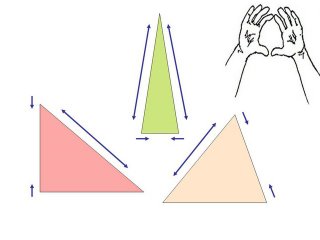
Labels:
Neil Bhandar
The Half Life of Ideas
Fast Company Now- Refrences the WSJ article why management trends quickly fade away (online subcription needed).
FC has summarized the points elegantly... worth a read
Labels:
Neil Bhandar
Monday, June 26, 2006
Attitude Adjustment
Attitude Adjustment from the Fast Company
Stint abroad is a résumé requirement - some advice on bridging cultural divides.
Labels:
Neil Bhandar
Saturday, June 24, 2006
How Can You Become a Smarter Marketer?
ANA Marketing Maestros: How Can You Become a Smarter Marketer?:
"It will require that we innovate, think differently, think like our customers"
Labels:
Neil Bhandar
Friday, June 23, 2006
Creative Recombination
Managing Change in a World of Excessive Change: Counterbalancing Creative Destruction and Creative Recombination
Eric Abrahamson is professor of management at Columbia Business School.
Labels:
Neil Bhandar


Sociogram
One of the first things I always ask from every new organization I visit/join is an organization chart. Call it by any other name (ORGANIGRAM as introduced by Mintzberg) it still represents the same elements, the organizational focus, reporting lines, flow of authority and responsibilities.
The part that is interesting is when one flipping the charts upside down! The ORGANIGRAM transforms into a SOCIOGRAM of the organization, the influence at every level in the hierarchy. Width of the structure at any level is directly proportional to the extent of social influence that level casts both above and below.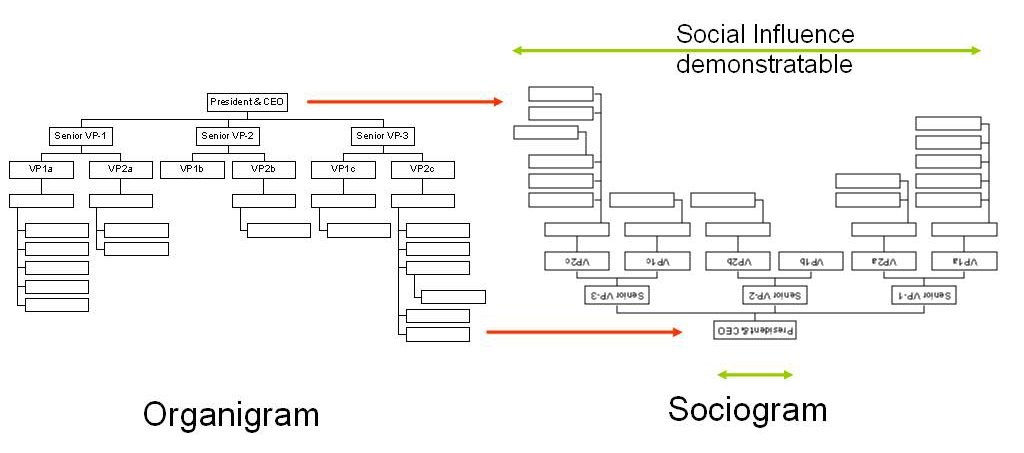
Labels:
Neil Bhandar
Thursday, June 22, 2006
The 15% Rule
Some have called it the GE model, I have not seen it to confirm... in anycase I think this is a hybrid of what I come to know.
The top 15% performers within a grade level will outperform the bottom 15% performers of the next higher grade level.
Talent Management must be the center stage of any corporate strategy even with an aging population.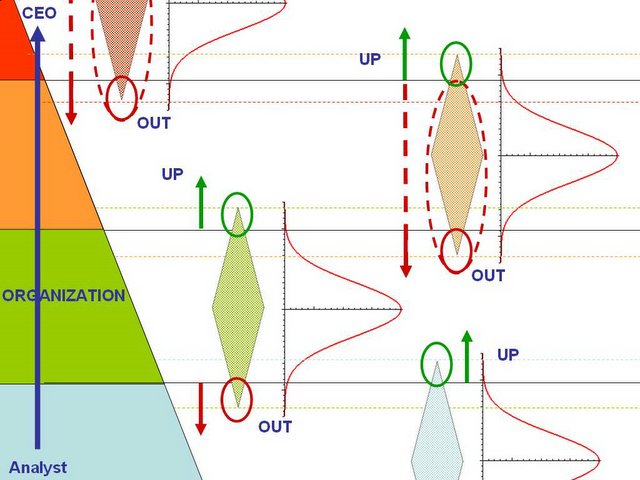
Labels:
Neil Bhandar
Wednesday, June 21, 2006
Career GPS
A couple years ago I started my list of the most abused business words. The list is not as long as I had expected it to be but continues to grow, some day I will publish the list. One of the words I recently started grappling with is “Career Pathing”. What is a career path? I did a general search on Google and came across the following links…
o Career Journal/College Journal from WSJ
o Internet Public Library for Teens
o Numerous recruiters and internet job forums and boards
o Career sections from National and Regional News papers – NYTimes, ChicagoTribune, etc.
o Various consortiums – Business Education, MBA.com, etc.
o Even some astrology sites…
o & much, much more
A common theme across all of the sites was creating awareness of the kinds of jobs, philosophies on what it expected at those levels, an inventory of the arsenal, tools and methods available at our disposal that we as individuals can leverage and some biographies of successful people who have made it and how. Clearly none had a route to get there only a map of the territory and some anecdotes and stories of previous explorers.
Tere are ten ways from Tuesday to skin a cat and so is true of a career path. There is a clear need to know where you want to be, develop and demonstrate the skills, adjust and sharpen the worn edges, an idea of what is one willing to stake and for how long and lastly what’s the exit strategy incase the goal seems worthless as things evolve. Our coaches and mentors can guide us but at the end of the day you are what you make of an opportunity!
Is there a Career GPS? Can I set my destination and have it steer me to the right destination?
Labels:
Neil Bhandar
HR and Strategy
Once you get beyond the sales pitch... an interesting article by - Right Management Consulting
HR's role in strategy implementation.
I wish HR could see as clear as the article and was as effective as the idealistic view shared in the article.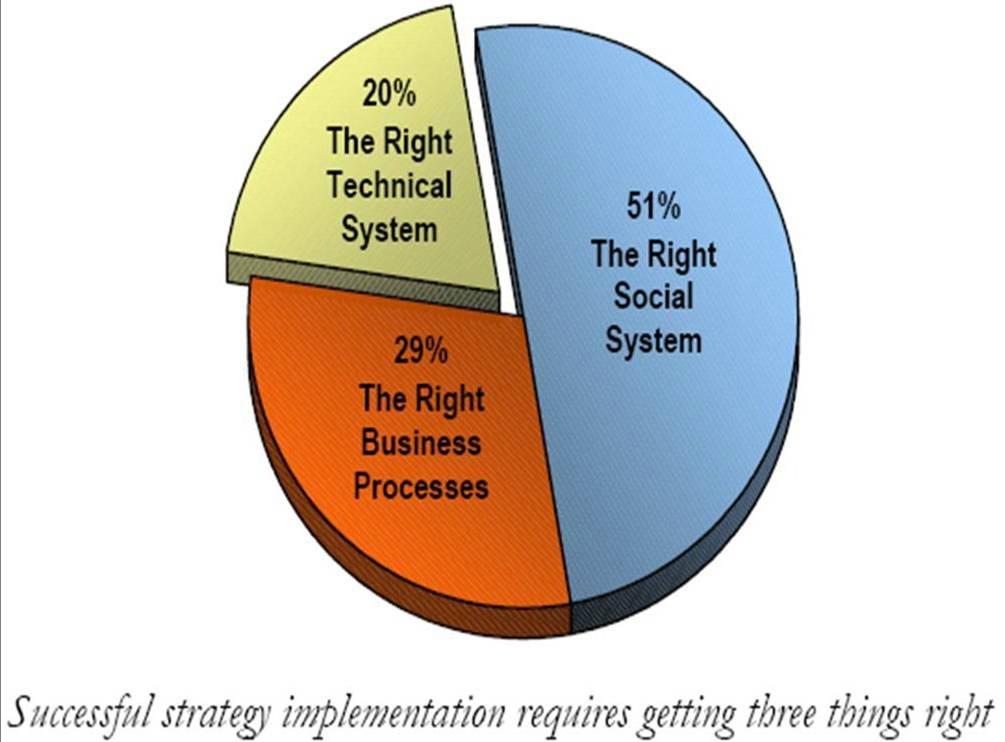
Image copyrighted to - Right Management Consultants
Labels:
Neil Bhandar
Tuesday, June 20, 2006
COORDINATION & AGILITY
Every organization is unique! Big, small, young, mature. On a weekend recently I decided to sit back and figure out the differences between the DNA of a startup and the DNA of a mature organization. I thought for a while and could not find anything distinguishing! I decided I would look though news from organizations on the public wires as examples to distinguish their characteristics.
The most commonly used word that I came across in the new content on mature organizations was “synergy”. But synergy means there are common strengths and these strengths align. I have seen many a teams in a tug of war, they both have strengths and they all work whole heartedly only to stay in the same position without moving one way or the other. So could they mean “alignment”? May be… COLLABORATION and COORDINATION? That was my “aah ha” moment, I thought that makes sense, benches of managers are taught over and over the art of leading, or what I call the sociology of creating influence and change. Successful change only occurs through collaboration and coordination.
I then started to search literature on startups and smaller organizations! A common theme that stood out was the desire to met a distinctly different or ancillary (yet different) need created by the products from the large corporations. So why was it that the large mature corporations miss the opportunity? They have smart people, they foster entrepreneurial spirit, they have deep pockets, then what’s so different. The answer was some what obvious, AGILITY and SERVICE!
All mature corporations start as startups at some point with the much needed agility, one on one customer service, as they begin to grow agility took back seats… rightfully so! The scale and scope forcing them to create greater collaboration and coordination between the moving parts of the organization. It would be fascinating to turbo charge an organization with the right mix of coordination and agility!
Labels:
Neil Bhandar
Monday, June 19, 2006
Perception Perception Perception
Recently on our drive back from lunch with a couple friends we started to talk about emerging markets in particular
Some one started by asking the multicultural folks in the car what was the general opinion of the
I stopped to ask what I thought were obvious answer, what do we think of
Labels:
Neil Bhandar
Sunday, June 18, 2006

Friday, June 16, 2006
Driving the only Metric that Matters: GROWTH
Association of National Advertisers, Inc.
Booz Allen Study on Marketing Organization DNA.
related blog: ANA Marketing Maestros
Labels:
Neil Bhandar
Success is never on 'SALE'
RadioShack CEO Claire Babrowski on how women can rise to the top
Podcast from the University of Chicago - GSB
http://chicagogsb.edu/multimedia/podcast/gsb.xml
Labels:
Neil Bhandar
Thursday, June 15, 2006
Saatchi has always been my fav
Chk out their How ideas are generated site - Saatchi & Saatchi
Labels:
Neil Bhandar
Work - Variety & Excitement
Every the years I felt a gradual stagnation kicking into every role I held, I wondered why? It drove a need to move up the corporate ladder, I pushed myself harder and made it happen in most cases and on other occasions decided to move on. Then recently on my ride to work a concept seeded in my mind… what is it about a new job and a higher role that creates excitement? The image below is the result of that ideation!
The colored triangles represent functions within the organization, they start off with a large base where a lot of the work is hands on. As the individual rises within the hierarchy of the organization their contribution to real hands on work declines but it automatically creates a certain amount of variety in the job (people management, management of budget, etc.) the title adds to the social influence the individual is able to have on his immediate organization and the rest of the company.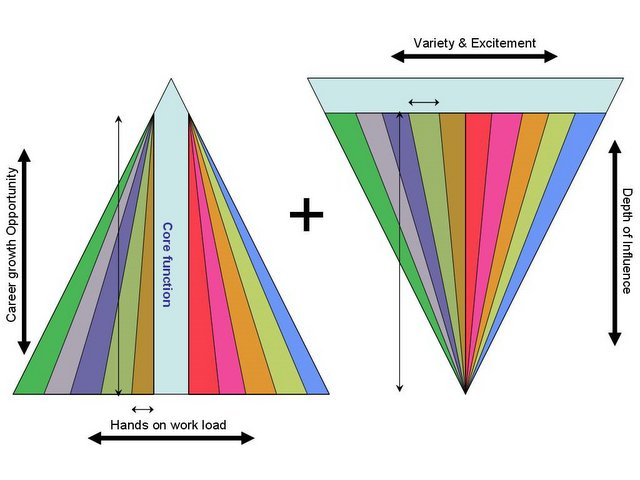
Labels:
Neil Bhandar
Wednesday, June 14, 2006
Destruction of creativity
One of the most misunderstood theories of management has been scientific management by Fredrick Taylor and the sister effort in
Over that same period of time creativity in the support functions has been destroyed! Functions became SILOS and were mandated to stay ancillary without opportunity to enter general management, each got a seat at the table while GMs sat at the head! Outside of line management motivation is expected to be derived mostly from financial rewards and punishment… not work enrichment.
In his 1983 book Structures in Five – Designing Effective Organizations, Mintzberg refers to this exact concept but focuses on the blue collar jobs. He quotes James Worthy of Sears and Roebuck from 1950, “One has the feeling of division of labor gone wild, far beyond any degree necessary for efficient production”. This by removing “all possible brain work from the shop floor and moving it into planning and laying out department”.
Labels:
Neil Bhandar
Tuesday, June 13, 2006
It is soooo obvious we don’t get it…
Most managers get so involved in the tactical projects they are engaged in that they often miss the big picture. I am a huge supporter of the balancing act between tactical bent versus a serious long term focus. I was at a friends place and he was trying to convince his little boy to change as we prepared to step out for a drive to the beach.
It was interesting to watch him expedite the process for an incentive to be able to play at the beach. The thought of the beach had only limited value given the little boy was enjoying his toys. In addition it also meant the little kid would have to clean up, obviously change and all that within a constrained amount of time. The kid looked reluctant, thought for a little while but finally decided he would get started. Guess he knew there was more in store once he got to the beach… pizza, ice cream, play in the ocean, sand castles, etc.
Some of these lessons come fairly early in life and yet, day in and day out we get bogged down by the most mundane and tactical things on hand and miss the big picture.
Labels:
Neil Bhandar
Fear of the benchmark!
Change is not easy, we have heard that a million and a half times! To the contrary a recent change I went through was GREAT. I am not just saying it but I mean it, the part that uncomfortable was the paranoia caused from my baggage. No I am not talking about inflection curves from Andy Grove’s, Only the Paranoid Survive. I am talking about the paranoia of “the known”. Am I beginning to sound stupid? but seriously… I mean paranoia of the knowing someone who is the very best that you cannot mimic no matter what you do and how hard you try!
It is the fear of the peak in front that looks insurmountable causing one to mock and poke holes! It is the fear of the benchmark. The manifestations of fear are even worse!
Why the fear? No one said a benchmark is the best strategy but the reverse is not true either
Labels:
Neil Bhandar
Judgement & Experience!
Good judgment comes from experience, and experience comes
from bad judgment.
- Barry LePatner
Labels:
Neil Bhandar
Monday, June 12, 2006
ANA Marketing Maestros
interesting Blog on the ANA site.
ANA Marketing Maestros: Growth-The Only Metric that Counts
Labels:
Neil Bhandar
Some of my intersting bookmarks…
I recently received a request to post my bookmarks, here are some of the more interesting ones…
o Prediction Markets
Paper; Info.
Here is from today’s Dow Jones Index hedges, whether the markets will rise or fall
Labels:
Neil Bhandar
Sunday, June 11, 2006
MENSA
I have a friend who is a Mensa. Years ago when she first told me about Mensa, she had a way of describing the organization. She said if you have a room full of Mensa members, you will have as many opinions in the room as the number of people, that’s a Mensa. I started to wonder if they were colored or white, short or tall, thin or fat, professional or stay at home. I am a strong supporter of diversity I have wondered how it would fit with the diversity strategy at most corporations.
We are always confusing diversity with equal opportunity? Why do we track them by race, gender? What is diversity really?
Labels:
Neil Bhandar
Friday, June 09, 2006
Self Organization
Self-organization is a process of increasing complexity in an effort to evolve! I came across the concept a couple years ago during a presentation about process scheduling – Bucket Bridges. "Bucket brigades" are a way of organizing workers on a flow line so that the line balances itself. I decided I would read up on Self Organization. I came across a cloud fall of data, the part that struck me as the most amazing was the fact that nature does not like organization and structure! That’s interesting? Guess that explain Man proposes, god disposes.
I worked for an organization where we had a clean desk policy for various reasons… some of our data was very sensitive in nature and more than anything else it was always believed a clean desk reflected discipline. The paradox is… there are instances of articles like - Messy desk = ordered mind, expert says; and then we have Laurence J. Peter - If a cluttered desk is the sign of a cluttered mind, what is the significance of a clean desk? A clean desk was a digression… it is interesting to note our obsession with organization. I once spoke with an executive who told me he wanted to put together an organization that delivered consistent breakthroughs! I have said this before… organization and breakthrough, oxymoron aren’t they? I have tremendous respect for organizations like 3M-Century of Innovation (US corp site) that consistently deliver innovation, but from the literature I have read I am convinced they thrive on chaos!
Labels:
Neil Bhandar
Values
I feel I am very fortunate to have had the opportunity to experience multiple cultures. Experiences help sculpt personalities and personalities define your choices… your choices make YOU! People and organizations all have value systems based on their experiences and cultures. I challenge you to find one that is NOT positive or self reinforcing! Yet we have all the crime, hatred, prejudice and bias.
Years ago I had a vice and one day I decided I would rid myself of this vice. I made a firm commitment to myself and decided I would share with my friends and my mentor. My mentor and I share similar origins and background; I have counted on him for an objective opinion over the years and often a socio-religious perspective. During my chat I told him about my plans, his reaction was, “I was weak and was the sharing was my drive for self affirmation!” that struck me as a tad bit odd. I enquired why he thought so. His response amazed me and to date continues to provide me strength in the decisions I make and all my execution plans. He said my brain has helped me synthesize the facts and realize that the vice would hurt me in the long run but my heart needed help in believing I could pull it off. The heart did not feel strong enough to be able to execute and hence I felt the need to say it out loud to my friends and repeat it over and over… my heart needed to start believing in being able to accomplish what I had set out to do. I cherish that advice to date!
Each time I read values of organizations around the world the everything from Enron to WorldCom, for profit to nonprofits, governmental organizations and nongovernmental organizations, it echoes of weakness. That lacuna in the hearts of these organizations, we can’t maintain these standards, but we continue to try, may be someday we may embody them?
Labels:
Neil Bhandar
Thursday, June 08, 2006
Strategy, Needs and Strengths
Diversity is the talk of the day. There isn’t a single corporation that has not included diversity as part of its strategy. What changed in the last decade that has made diversity such a significant element in our work place? Government has instituted accountability, we have clearly gotten more litigious as a society and there has been a significant rise in media coverage on outsourcing and developing and emergent markets like the BRIC countries. I am not sure that could have done it though? Given peoples migratory patters for generations! We have certainly started to measure them in greater detail lately than we ever did in history.
But who knows… it is all a mater of point of view.
Back to strategy… needs and strengths drive strategy! Diversity is a necessity and so it is a strategy. What is diversity anyway? The dictionary definition was “differing from one another; composed of distinct or unlike elements or qualities”, but that is not how it is measured. Is this once again one of those “SHADOW MAGIC”. People miss the obvious, diversity is not just physical, and it is diversity of thought and action. How do we measure it? It is not enough to measure it but to appreciate and reward it! Don’t muddle strategy with WYSIWYG.
Labels:
Neil Bhandar
Cult of objectivity
Diversity at its best from, CBC Radio - Ideas.
An interesting and diverse perspective on opinions from Continental Europe and the United States in a coffee table discussion - CONTINENTAL RIFT
(A discussion between French philosopher Alain Finkielkraut and John MacArthur, publisher of Harper’s Magazine)
link to the audio - MP3
Labels:
Neil Bhandar
Wednesday, June 07, 2006
Life of learning
When I graduated I heard the classic convocation speech… learning does not end with school but is the end of the beginning. I surely felt… ok so I am on my way to graduate school, I got it. Two more years and I will be done for sure. Finally! Then I heard it again at the end of my graduate degree and I felt how could that be? I started my first job a highly reputed organization and when it was time to move on I reflected on all the new things I learned and I was amazed. The second time the economy turned sour and I was let go before I could exit. But I continued my reflection only to realize my learning continued, I had made strides both professionally, personally, made great friends for life and stepped on numerous toes. I entered into a business and was very successful; I realized the lack of a structured development program and started to acquire codified knowledge from texts, journals and professional interaction. But the learning continued! I acquired tacit knowledge from my hands on work and felt enriched! It was time for a change again. I worked at another company and my growth accelerated far surpassing my peers… I wondered what could have caused it? There had been areas where I had refined and enriched myself through the acquisition of codified knowledge that it felt unusual to relive the readings and writing from literature I had read and assimilated. Codified knowledge is no replacement for tacit hands on learning but it is a good start! Without adequate the tacit knowledge codified learning is like reading the word “hot” but not knowing what “hot” really feels like. In essence learning continued. I am not sure I understood what it meant when I heard those words… learning does not end with school but is the end of the beginning. I do believe it has been a life of learning.
Labels:
Neil Bhandar
Kids & Stewardship
There is much to be said about a kid who wakes up and makes his or her bed… help with readying up the table for dinner, doing the dishes after dinner, picking up after play, helping with the yard work, etc. etc. Each time we visit our friends I love to watch their kids, they inspire me… There is always something interesting to notice from one child to the other and from one set of kids to the other.
- Not everyone will take on a task without being asked.
- Some compete with their brothers and sisters and other family based on the effort
- Some will do it but only half heartedly
- Some will do it because a guest is present
- Some others will do it for candy
The list goes on… When does stewardship really settle in our psyche? Almost every single one of us has heard fable of the boulder in the middle of a major road that blocks traffic but not a single resident would invest the effort in moving it to the side. Until one day a gentleman decides to move the boulder only to realize a handsome gift hidden beloe the boulder, from the king for his STEWARDSHIP and social responsibility.
And yet we all forget! Dr. Covey makes a profound statement… “the gap between stimulus and our response to that stimulus is choice”, in 7 habits of Highly Effective People. It is these choices that define who we are!
Organizations offer innumerable courses to its employees on stewardship and personal responsibility, I challenge the approach. I think what we need is a course that appeals to that inner self, the one that weights good versus bad, right versus wrong and drives our choices!
Labels:
Neil Bhandar
Tuesday, June 06, 2006
Hiring: The Lake Wobegon Strategy
http://googleresearch.blogspot.com/2006/03/hiring-lake-wobegon-strategy.html
- Lake Wobegon Strategy - only hire candidates who are above the mean of your current employees
- no hiring manager
Labels:
Neil Bhandar

Create an imperfection and leveraging it
I grew up learning that imperfections were a bad thing. Our parents, our teachers and almost everyone is always trying to fix something or the other. They are always trying to fill some void somewhere… “You don’t read fast enough”, “You don’t chew your food”, “Improve your hand writing”, “Improve your vocabulary”, I could go on and on… As I grew I realized I there was no way I could do all those things right… I am sure there are others more immaculate than me but there is an equal likelihood of those like me. What a novel idea I thought… imperfections as an opportunity to serve!
A marketer will tell you it’s your differentiation strategy… an economist will tell you it’s your leverage strategy.
Each time I hear some one say, every business there is to be built has been built. I say, you aren’t looking hard enough! If an opportunity does not exit, create an imperfection and leverage it.
Labels:
Neil Bhandar
Talk about TrUsT!
Trust me! I am hoping I will have lost you by now. Wow… I must have some credibility? Yoo-hoo. I was critically analyzing trust as the starting point for a relationship recently. The model fell apart given the need for the parties to invest trust. Each party had their own points of view. One assumed that it demonstrated trust by coming to the table while the other assumed... that as the start of trust building process. When the first was expecting the second to build credibility the first expected the same from the other. There is no greater truth than acknowledging, ‘everything in life is a two way street!’, so is TRUST!
The only thing I ever learnd from my engineering background was don’t make any assumptions. Granted there is no enough time or money to do much without making assumptions, but I am not sure I can start with trust as a basis for an assumption…
I am a 'do it and show me' guy… nothing prepared me more for that than my upbringing and later, school. As an engineer I always tried things and strived for the same from my peers. I evolved into a marketer and learnt the vitals of marketing… VALUE PROPOSITION! It’s the credibility element. Trust follows with credibility, then why should trust be the start of a relationship model?
Labels:
Neil Bhandar
Monday, June 05, 2006
Google Trends

Another fabulous tool only from the labs of Google! Google Trends
http://www.marketingprofs.com/6/reynolds9.asp
Labels:
Neil Bhandar
The future of the enterprise
Only from IBM - Expanding the Innovation Horizon
http://www-306.ibm.com/e-business/ondemand/us/pointofview/enterprise/mar27/index.html
- Business model innovation is becoming the new strategic differentiator. "The business model we choose will determine the success or failure of our strategy," one study participant said. In contrast to the findings of the 2004 survey, innovation in the enterprise's business model garnered nearly as much attention as innovation in a company's core processes and functions.
- Business model innovation can pay off. In the financial analysis for the study, companies that have grown their operating margins faster than their competitors were putting twice as much emphasis on business model innovation as underperformers
- Innovation doesn't need a badge to get in. CEOs said their company's employees were the most significant source for innovative ideas. But ranking close behind employees were business partners and customers—indicating that two out of the three top sources for the best ideas now lie outside the enterprise.
- Collaboration can pay off. The financial analysis explains why CEOs are more eager to partner and engage with other organizations than ever before. Companies with higher revenue growth reported using external sources significantly more than the slower growers. As one CEO said: "If you think you have all the answers internally, you are wrong."
Labels:
Neil Bhandar
Getting personal!
I formulated an equation on Friday after a long and hard day... The more I looked at it the more it made sense.
Lightening strike * Right Angle of incidence = Minimal damage
I started to apply the soft stuff and added a pinch of Asian mysticism, the formulation looked even better.
Lightening strike * Angle of incidence + Good Karma (to compensate for Right Angle) = Minimal damage
Until finally I pulled one from my mom’s receipe. Now I had the heavy weight...
Lightening strike * Angle of incidence + Good Karma + Fate = Minimal damage
By the end it seemed like a panacea! No kidding! Take this and apply… if it fails let me know. Granted I did not need to do any ground work, but Good Karma compensates for that part… No ground work, no Karma!


Labels:
Neil Bhandar

CEO and talent Management
The CEO’s role in talent management
A paper by the Economist Intelligence Unit in co-operation with Development Dimensions International
May, 2006
May, 2006
Talent management now features prominently on the CEO’s agenda, according to a white paper by the Economist Intelligence Unit, in co-operation with Development Dimensions International (DDI), a global human resources consulting firm. Once only of concern to human resources (HR) departments, it is now among CEOs’ most pressing responsibilities, taking more than 20% of their time. The overall view is summed up by Tom Wilson of US insurance giant Allstate Corp.: “The most important thing I have to worry about is people.”
http://www.eiu.com/site_info.asp?info_name=eiu_CEO_role_in_talent_management(may need subscription)
Labels:
Neil Bhandar
Friday, June 02, 2006
Interpreter of dreams
It is an amazing opportunity to look at organizations and structures. It is amazing to notice a stark similarity with historical accounts of empires and princely expedition. In a series of lectures delivered between 1915-1916 at the
All functions support the GM in his or her tasks. In today’s day and age of effectiveness, efficiency and performance measurement the two arms of the GM are finance and marketing research. In his book the Innovator’s Dilemma, Clayton Christensen talks about an episode at EMC when they were able to understand and relate the prospective organization structure pure based on look at the architecture of the motherboard of a DEC computer. More recent the NY Times example mapping of emails at Enron let to an insightful discovery. Emails exchanged between various people in the organization to isolate and identify the most important and potentially the most influential member of the organization. In turn detect anomalies where people had duplicate emails addresses to work around the system.
Structures are interesting and so are the patterns they bear resemblances to. Technology has only helped to blur some of the boundaries between their specific deliverables but for the most part that continue to be the dream interpreters to the leaders as they analyze the past and recommend future course.
Labels:
Neil Bhandar
X O X O
I have noticed I am more intrigued by simplicity in life than I am by any thing else! It is absolutely amazing. By my very nature I have a tendency to complicate things. My muse always tells me I need to think simple. I certainly believe it is a more enriched form of thinking and I need to work towards it. In every element of life be it communication, planning, execution, design, engineering, marketing, etc. simplicity is clarity. As a perpetual student of strategy I believe the power of simplicity does the same as Sherlock Holmes demonstrates in his ability to find the obvious. Simplicity has greater penetration than anything else, it is lucid, it takes practice.
Overtime I have noticed and made a list of things I have deemed to exemplify SIMPLICITY!
Google – Search Engine
iPod – Apple
I have a long, long list that is now taking up a lot of hard disk space on my machine.
Labels:
Neil Bhandar
Charisma
He’s got the Fire in his belly! She has a presence about herself. I get Butterflies fluttering in the stomach each time I meet them.
I am the first to exclaim and will be the first to say that about people. Some organizations have it, stoke it, develop it and others struggle. Eventually it is all a point of view. Where you are, where you have been and how you got there will pave the way. This is as true of people as it is of organizations and how they perceive people.
People are by far the most amazing and interesting entities. Who has charisma and who does not is much more a function of where they have been (the company they have kept) and how they got there (gusto) than just their past and pro forma performance. Jim Collins in his book good to great talks about how charisma can be a dangerous thing, his example of Winston Churchill’s management of information during the second big war is a perfect example of the dangers of charisma but at on the same note a leader without charisma is like a light house without a light.
I do feel the need for a certain exhilaration every once in a while! Not the kind of high from a shot of tequila but a true rush from the talk of accomplishments. High level of performance often feeds the fire, but I am my own judge! I do need the external unbiased assessment but that only helps to reinforce or course correct my personal assessment, not drive me to be Charismatic!
Annual meetings are often an amazing place for stock price talk. The external assessment of the performance is often mistaken for success, but I want to high light the recent turbulences and corporate scandals where organizations saw some hay days… at the heights of their stock prices their leaders took respite in fake earnings. Performance is not a substitute for charisma! Performance is luster while charisma is ability to reflect light.
Labels:
Neil Bhandar
Visual Complexity
Visualization! See, experience then imagine
Fascinating Site - http://www.visualcomplexity.com/vc/
Labels:
Neil Bhandar
Thursday, June 01, 2006
Shadow Magic
I am a huge fan of the international films. A couple years ago I watched a Chinese movie called Shadow Magic, an interesting story about the introduction of motion picture in
In any case this is not a movie critic I don’t think I was cut out for it, nor do I have much interest in it. I just like the pun that is life! I am just playing on the words like always, SHADOW MAGIC, bait and switch… Can’t think of a better way to talk about it would playing it out.
Metrics and measurements always fascinate me. Twain said it better than anybody else.
"There are three kinds of lies: lies, damned lies and statistics."
- Autobiography of Mark Twain
In school we studied ‘causality’, it takes a smart statistician combined with a sharp social scientist (Levitt is clearly a rarity) to interpret numbers… Performance scores, success measures are quite the same. I cannot count the number of times I have seen people measure and interpret the way it looks best versus the way it really should. It is Shadow Magic! Although nature always has the last laugh, Darwinism I guess… what else?
Labels:
Neil Bhandar
Bragging Rights
Very interesting article on "How to Brag?" - Social Responsibility
Fleishman-Hillard
Labels:
Neil Bhandar
Vee-sur-jun
These days it is tough to read a business article without the mention of
Last year I was amazed when I read market penetration statistics published by Borrell Associates for the Apple iPod only a couple months after launch. I was a recent summit when I was introduced to the term “THE DEFAULT BRAND!”; the Apple iPod is the default brand in the portable mp3 player category, much like Starbucks is in Coffee and Amazon.com is for internet books purchases. If market penetration were a measure…
The list is amazing –
- Make it Madras from Old Navy – Name of a
- Avatar, Online altar egos – Indian word for incarnation (access to this link may need subscription)
- Big Blue Shift – IBM holds its annual investor meeting for the first time in
- Pick up the phone to call your financial services provider or even the Tech support for your computer or its peripheral and expect to speak with some one in
- Walk up to your neighborhood departmental store and be amazed to see half the store sourced from
I could go on and on… in closing though I could solve the mystery of the title of this short essay, which originates from Marathi an old Indian language. Vee-sur-jun means immersion.
Labels:
Neil Bhandar
Wednesday, May 31, 2006
Flexible yardstick
An oxymoron don’t you think? Economics is a funny subject! I have learnt more from Economics than I have from most other subjects put together… I may not have been paying much attention in the other classes… I guess? In any case, I was chatting with a friend on matters of measurement and metrics and I blurted ‘flexible yardstick’. I started to wonder when and where I first heard the term, ‘flexible yardstick’… it all came back to me… CPI – The consumer price index as a measure of inflation. The words took me down memory lane to the class room sessions in Macro Economics and Paul Samuelson. So what’s wrong with CPI as an inflation measure? Guess it is all the short term profiteering, hoarding, fads, etc. that lend the measure ineffective at reporting the variation in the value of money. Strange as it may sound I have never dabbled in the world of economics ever since that class, although I play ‘GAMES’ all the time.
Our conversation evolved into a discussion of biases in measurements, short term memory is always sharper than long term memory in addition to people believe anything, they believe forms their perception, and perception is reality. So by induction principle yardsticks are flexible…
Sounds like a lot of baloney, but it really isn’t... “Perception is Reality”. To that extent the only resolution to a systemic challenge like flexible yardstick is a constructive change management program combined with a strong, astute leadership.
Labels:
Neil Bhandar
Tuesday, May 30, 2006
Communication...
A long time manager once told me it takes 15 positive actions to erase 1 negative action to turn around a dissatisfied employee. I am a believer in Dr. Covey and agree in creating and depositing into an emotional bank account before making any withdrawal. When I heard the 15/1 leverage I could not disagree.
As a marketer first and foremost I market, “Brand Me”. I know my equity and I communicate. I build on my equity and I leverage. Years ago I read it takes as may as five repetitions to convey your point across to your customers/consumers.
Some times thought it seems like we over communicate. I agree numbers don’t speak for themselves… you need to fill the gaps, but I often feel like people begin by trying to fill those gaps and become the document. The most classic is evaluations and assessments. Measurements and metrics become secondary and the subjective interpretations of the criteria and alignment with strategy take center stage.
Burnt once fifteen times shy... guess I need to be hit 75 (5*15) times before I see the value?
Labels:
Neil Bhandar
Friday, May 26, 2006
Hopelessness
Stephen Vizinczey - "Strange as it seems, no amount of learning can cure stupidity, and higher education positively fortifies it."
Labels:
Neil Bhandar
Who am I? What do I do? How can I help? When can I help?
No I am not nuts? Each time I have tried to redefine myself I have answered those questions. Then at some point I thought what am I really trying to do? It is still me, in the… mind, body and soul. I did not realize what I was really trying to accomplish?
...and then a couple years later I changed functions again. This time I was some how close to the art and science of package design and those questions I answered for myself popped up in front of me!
That’s when I realized I am only repacking myself. I live to reinvent myself!
Life is common sense, pick the pieces and connect them.
Labels:
Neil Bhandar
Design
Yesterday I heard about a satarical video "Microsoft iPod" and rushed to watch it on http://video.google.com. It sure was very funny. I was quickly reminded of a quote by Antoine De Saint-Exupery.
You know you’ve achieved perfection in design, Not when you have nothing more to add, But when you have nothing more to take away.
– Antoine De Saint-Exupery
Labels:
Neil Bhandar
Inspiration
I started developing and submitting ideas for new and innovative products long before I ever thought market them someday. My ideation was so rampant and I can share some long stories. The first time I ever interviewed for a marketing position the brand manager asked me how I get these ideas, I thought for a moment and sputtered… the environment and he said what does that mean. I said seriously everything around me inspires a thought, the thought leads to an idea, the idea leads to a solution and the solution is often the product.
He asked me for an example and I said last evening I was listening to NPR on my drive back, a segment on the show inspired a thought into a product. Obviously not every product is viable and not every idea is pragmatic but if you leave the windows and doors to a room open you are bound to have a drift of a sweet fragrant flower flowing through at some point or the other?
The fundamental challenge is to open these windows to our minds and souls! We are often caught up in our own self and never disengage to experience, enjoy and analyze the ambience around us. The joy of experience is inspiration itself.
Labels:
Neil Bhandar
Subscribe to:
Posts (Atom)


